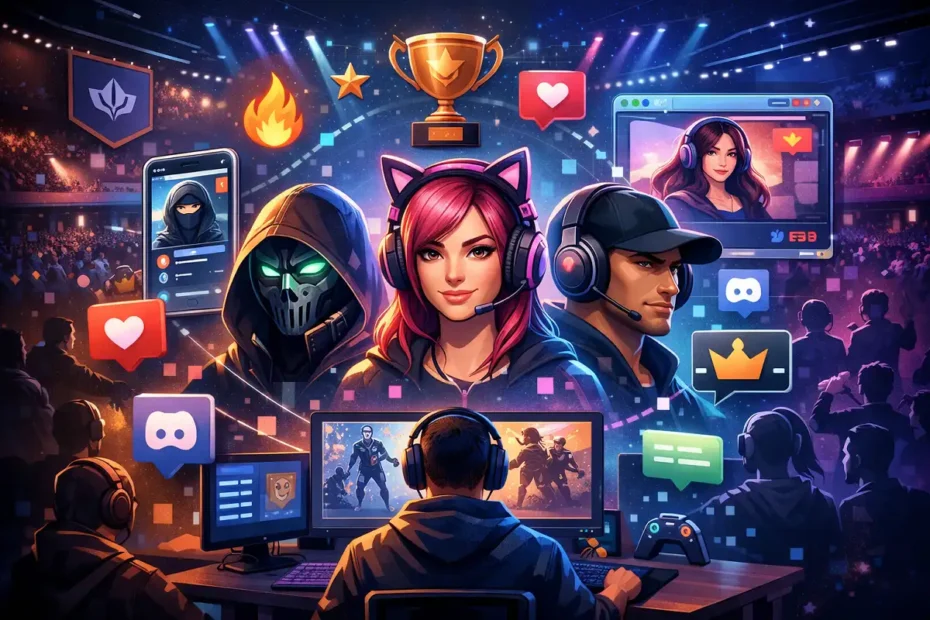
Gaming has always been about more than pressing buttons. From the earliest arcade cabinets to today’s competitive esports arenas, players have been shaping identities, communities, and reputations through the games they play. What has changed is how visible and persistent those identities have become. In modern gaming culture, a player’s presence extends far beyond the screen. Usernames, avatars, profiles, and digital personas now travel across platforms, communities, and competitive spaces. Whether you’re playing casually, streaming, or following esports, how you present yourself digitally has become part of the experience itself. This shift isn’t about vanity. It’s about connection, recognition, and immersion.
From Anonymous Players to Recognizable Personas
In the past, gaming identities were often temporary. You logged in, played a session, and logged out. Today, players carry their identities across games, forums, Discord servers, and streaming platforms. A recognizable profile helps others remember who you are, what you play, and how you engage with the community.
This is especially noticeable in competitive and multiplayer environments. Clans, guilds, and teams rely on recognizable members. Streamers and content creators build trust with their audience through consistent branding. Even casual players benefit from a clear identity that helps them stand out in social spaces.
Digital identity has become a social layer that sits on top of gameplay.
Why Visual Identity Matters in Gaming Communities
Gaming communities are highly visual. Profile images, overlays, badges, and icons appear everywhere, from leaderboards to chat windows. These visuals act as quick signals, helping players recognize allies, rivals, and creators at a glance.
A strong visual identity doesn’t need to be complex. Often, simplicity works best. A clean avatar, a consistent color palette, or a recognizable symbol can be enough to make someone memorable.
For many players, experimenting with their visual identity becomes part of the fun. Changing an avatar for a new season, event, or game release can feel like putting on new gear before a match. It adds personality without affecting gameplay balance.
Avatars as an Extension of Playstyle
Interestingly, avatars often reflect how players see themselves in-game. Some choose designs that feel serious and competitive. Others lean into humor, fantasy, or nostalgia. These choices communicate intent before a single match begins.
In esports and ranked play, avatars can also serve practical purposes. Clear, consistent visuals make it easier for teammates and audiences to follow who’s who, especially during streams or tournaments. This is one reason many competitive players avoid constantly changing their online appearance.
Tools that let players experiment safely with identity, such as an avatar maker from Adobe Express, are often used simply as creative playgrounds rather than branding tools. Players try ideas, test styles, and settle on what feels right without pressure.
Streaming, Esports, and the Rise of Personal Branding
Streaming platforms have amplified the importance of identity even further. A streamer’s avatar, profile image, and visual theme often become just as recognizable as their voice or gameplay style.
Viewers scrolling through streams make snap decisions in seconds. A clear visual identity helps creators stand out and feel established, even before someone clicks into the stream. This doesn’t require professional design skills. It requires consistency and authenticity.
Esports teams follow similar principles. Logos, player icons, and visual systems help fans follow teams across tournaments and platforms. These visuals reinforce loyalty and make competitive scenes easier to navigate for new viewers.
Community Spaces Beyond the Game
Gaming doesn’t end when a match ends. Discord servers, Reddit threads, and social platforms host discussions, strategies, and friendships that extend long after gameplay stops. In these spaces, avatars and usernames often replace in-game characters as the primary representation of identity.
A recognizable avatar can make conversations feel more personal. It helps users track familiar voices in long threads and encourages accountability. When people feel seen, they tend to engage more thoughtfully.
This matters for community health. Clear identity reduces anonymity-driven toxicity and encourages more respectful interactions, especially in competitive environments where emotions can run high.
Customization Without Pressure
One of the most interesting aspects of modern gaming identity is how low the barrier to entry has become. Players no longer need advanced design skills to create something that feels personal. Simple tools allow experimentation without commitment.
This flexibility mirrors how games themselves are designed today. Custom loadouts, cosmetic items, and personalization options let players shape their experience without impacting fairness. Identity tools follow the same philosophy. They add flavor without changing the core mechanics.
For many players, identity customization is a creative outlet that sits alongside gameplay rather than competing with it.
Read Also: How to optimize Xbox Series X for low latency gaming
Balancing Identity and Focus
Of course, visual identity should never distract from the game itself. The best gaming communities and creators understand that identity supports experience, not the other way around.
Overly complex visuals, constant rebranding, or unclear identity can confuse audiences and dilute presence. The most effective identities are usually simple, consistent, and aligned with the player’s personality or playstyle.
Just like game design, restraint often produces better results than excess.
Read Also: Eurogamersonline.com PC Gaming
Looking Ahead: Identity as Part of the Gaming Ecosystem
As gaming continues to evolve, digital identity will likely become even more integrated. Cross-platform profiles, shared progression systems, and unified accounts already hint at a future where identity moves seamlessly between games and communities.
In that future, avatars and visual markers won’t just represent who you are. They’ll carry history, achievements, and reputation across experiences. This makes thoughtful identity choices more meaningful, even for casual players.
Gaming has always been about expression, whether through playstyle, strategy, or creativity. Digital identity is simply another way players express themselves in an increasingly connected world.
Conclusion: More Than Just a Profile Picture
At its heart, gaming is social. Even single-player experiences are shared through discussions, streams, and communities. How players present themselves visually helps shape those interactions.
Avatars and digital identity tools aren’t about chasing trends or building brands. They’re about clarity, connection, and self-expression. When used thoughtfully, they enhance community, reduce friction, and make gaming spaces feel more human.
In a world where games are no longer isolated experiences, identity becomes part of the play. And like any good game mechanic, it works best when it feels natural, optional, and fun.