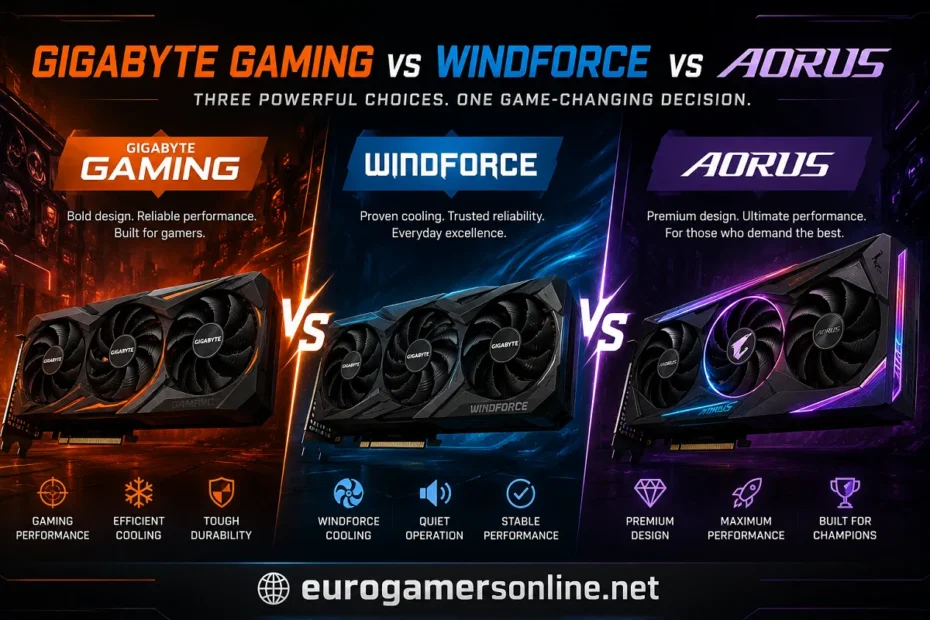
If you’ve been looking closely at Gigabyte’s graphics cards lately, you might have found it strange that the same GPU is being sold with different names and designs. Some are labeled “Aorus”, some “Gaming OC,” and some “Windforce”, while the actual chip is almost identical. But looking at the prices, it seems as if the performance of each model is vastly different. This is why many buyers are left wondering if the extra money is being spent on better speed and cooling, or just for flashy RGB lights, a premium body, and marketing?
After years of building different PCs and testing countless Gigabyte GPU models, it’s clear that the core processor within the same graphics card series is mostly the same. The real difference is in the cooling technology, performance-enhancing settings, power delivery systems, material quality, and exterior styling. That’s why it’s important to know which edition actually offers better value and which is just expensive because of the extra design or lighting.
First, Clear Up the Naming Confusion
Before you start comparing different GPU series, there’s one important fact to know, because this is what often confuses people: “Windforce” is not just a name, but also represents two different things.
Many buyers initially think that WINDFORCE is just the name of a fan or cooling system, but Gigabyte also uses it as its entry-level GPU series. This is why the name often confuses. The fact is that the Gaming and many Aorus graphics cards also include WINDFORCE cooling technology, which just differs in design and quality. So when someone talks about “Windforce vs. Gaming”, they are usually referring to two different card tiers, not just the cooling system. Once this basic difference is understood, Gigabyte’s entire GPU lineup starts to feel quite logical and simple.
The Gigabyte GPU Hierarchy, Top to Bottom
Each graphics card in Gigabyte’s RTX 50 series can use the same GPU chip, but the company offers them in different series so that there is a choice to suit every budget and need. At the top is the Aorus Master, which comes with better cooling, a stronger power design, more premium materials, and prominent RGB styling. Next comes the Gaming OC series, which is considered a balanced choice between performance and price. Then there is the Aero, which is especially popular for white or creator-focused PC builds. Below that is the Eagle, which offers relatively simple but good value. Finally, there is the Windforce series, which is made for budget users with a more basic design and fewer extra features. The Xtreme Waterforce, on the other hand, is a special liquid-cooled model that is only found in the most powerful GPUs. It is made for quieter cooling and lower temperatures, which is why it is considered the most high-end option in the entire lineup.
In a nutshell, the order goes like this:
Aorus = Most premium and high-end
Gaming = Balanced mid-range choice
Windforce = Simple and budget-friendly option.
Aorus: The Premium, Enthusiast Tier
Aorus is Gigabyte’s premium-class gaming series, designed specifically for users who want not just raw performance, but also high quality, modern design, and advanced features. The lineup includes powerful cooling systems, improved power delivery, more stable boost speeds, and attractive RGB effects. The company also uses its best materials and strong build quality in this series to ensure that the cards run cooler and more stably for a longer period of time. Some flagship models also feature LCDs, advanced BIOS modes, and additional customization options, making them a special choice for hardcore gamers and PC enthusiasts.
Aorus models are typically built with Gigabyte’s most premium and advanced cooling engineering. These cards typically feature the company’s latest heat dissipation technologies to better control temperatures during performance. The flagship graphics cards use the “Windforce Hyperburst” cooling system, which consists of a specially separated PCB layout, patented Hawk fans, and an additional Overdrive fan. This design makes airflow more efficient and helps dissipate heat faster.
It is suitable for users who work with high-power and high-wattage graphics cards (such as the 5080 or 5090 class). Such people want maximum cooling performance, minimal noise, and stable temperatures from their system.
Gaming: The Sensible Middle Ground
The Gaming (commonly known as the “Gaming OC”) tier is a long-running mainstream graphics card offered by Gigabyte, and is considered the best mid-range choice for most users. It is said to be a traditional and very popular Gigabyte card that focuses specifically on strong performance and reliable stability. Its design is mostly based on a simple black theme, which easily integrates with a variety of PC builds.
It also leaves no stone unturned in terms of cooling. The Gaming OC features a Windforce cooling system that includes three special blade fans, which rotate in alternate directions for better airflow and less noise (alternate spinning). It has a large copper base plate directly connected to the GPU that absorbs heat effectively. In addition, there is a robust network of heat pipes that help dissipate and expel heat quickly. It also includes a dual BIOS option, allowing the user to choose performance or silent mode according to their needs. Moreover, it provides a sturdy metal backplate, better build quality, Ultra Durable certified parts, and overall greater durability. It also includes the RGB Halo taken from the Aorus line, which provides beautiful and customizable RGB lighting on the side of the card. This model is mostly made for both casual and hardcore gamers. You get a full three-fan cooling design that keeps the GPU cool even under constant load. A slight overclock is already present from the factory, which gives a little extra performance boost. Power delivery is also kept reliable and stable so that there are no issues during long gaming sessions. The addition of RGB lighting gives it a beautiful gaming look, while the best part is that all this is available without the high price of the Aorus.
Windforce: The Practical, Budget-Focused Tier
The Windforce tier card is a simple and feature-limited option from Gigabyte. According to Gigabyte, the Windforce series is positioned as an entry-level lineup. Its design is relatively simple, clean, and based on a black theme. This is a better choice for users who prefer stability and durability over more decorative features. This model is usually the closest to the reference design, and in some cases, it is also available in a non-overclocked version without a factory overclock.
How Much Do the Differences Actually Matter?
This is where understanding the truth and reality is more important than marketing. The actual performance difference between different tiers is usually very small. Moving up to the top models doesn’t just mean that the card will be much faster, but most of the difference comes in power delivery and cooling headroom. According to experienced PC builders, the higher you go in the higher-end tier, the more you can push the power limit, but the benefits of overclocking are limited due to Nvidia’s strict limits. Typically, only a 13 to 20 percent improvement over stock can be achieved, and even that isn’t possible in every case. The trade-off often comes in higher power consumption, higher heat, and sometimes increased noise.
The simple truth is that getting the more expensive version doesn’t necessarily mean you’ll get higher frame rates. The real difference is mostly in things like better cooling systems, lower temperatures, quieter fans, and a stronger overall build quality. In some cases, you’ll also get a better warranty or a slightly better design. But if you look at gaming performance alone, the difference is very small. Many reviews have found that the more expensive models are priced higher simply because of their name and branding, while the performance boost isn’t enough to be clearly noticeable to the average user. Typically, the price increases by about 10%, but the performance gains aren’t enough to be considered a “wow factor.”
Quick Comparison
| Factor | Windforce | Gaming | Aorus |
|---|---|---|---|
| Position | Entry-level | Mid-range | Premium |
| Cooler size | Smallest | Large triple-fan | Largest |
| Factory OC | Low / none | Moderate | Highest |
| RGB | Minimal | RGB Halo | Full RGB (+ LCD on top models) |
| Aesthetics | Simple black | Black, versatile | Showpiece |
| Best for | Value, reliability | Most gamers | Enthusiasts, high-end GPUs |
Frequently Asked Questions
Is the Aorus card faster than the Gaming or Windforce version of the same GPU?
The difference is very small. Both cards use the same GPU chip, so the basic performance remains almost the same. The Aorus model usually has a slightly higher factory clock and, due to better cooling, it runs relatively cooler under long-term loads. However, in everyday games and real-world use, the frame rate difference is very small and can be felt up to a few percent at most, which is not clearly visible to most users.
Does the Windforce tier use a worse cooler than Gaming or Aorus?
It uses a relatively small and simple version of the Windforce cooling system. It is perfectly suited for the mid-range graphics cards it is bundled with, as it provides enough performance for general use and gaming. However, it allows higher-tier models to have more robust cooling capabilities, allowing them to run at lower temperatures and produce less noise, especially during prolonged and heavy use.
Is Aorus worth the extra money?
In high-wattage GPUs like the 5080 or 5090, a better cooling system and stronger power delivery are really important and beneficial, as the load on these cards is very high and the temperatures can also rise quickly. In such cases, premium models provide more stable performance, better cooling, and relatively low noise. In contrast, in lower-end GPUs, this extra cost is mostly just for design, aesthetics (static,s), and branding, while the actual gaming performance is not much different.
Which tier is best for a small PC case?
The Windforce and Eagle series cards are typically manufactured in small-form-factor designs, which allow them to fit easily into cases with limited space. In contrast, the Aorus and Gaming models are relatively large in size and take up more space.
Do they all come with the same warranty?
This isn’t always true. In some cases, higher-tier models come with longer warranties, such as Gigabyte offering up to four years of warranty upon registration on some Aorus, Gaming, and Aero cards. But this isn’t mandatory for every model or in every country, so it’s important to check the product listing for your specific model and region before purchasing.
Final Words
For most users, the Gaming OC tier is a great and balanced choice. It features a powerful cooling system, a reasonable price, and a design that easily fits into any gaming or professional PC setup. If you’re running a high-power flagship GPU or if high-quality cooling, low noise, and a premium look and feel are most important to you, then the Aorus series is a better choice. The Windforce is best for those who simply value basic performance, reliable operation, and a relatively small size, and who don’t need RGB lighting or additional overclocking features.T he bottom line is that if you choose the right tier based on your needs and GPU power, you can avoid unnecessary expenses and not even notice the difference that only seems high on paper but is not evident in the game.
For any suggestions or changes, please contact us.