
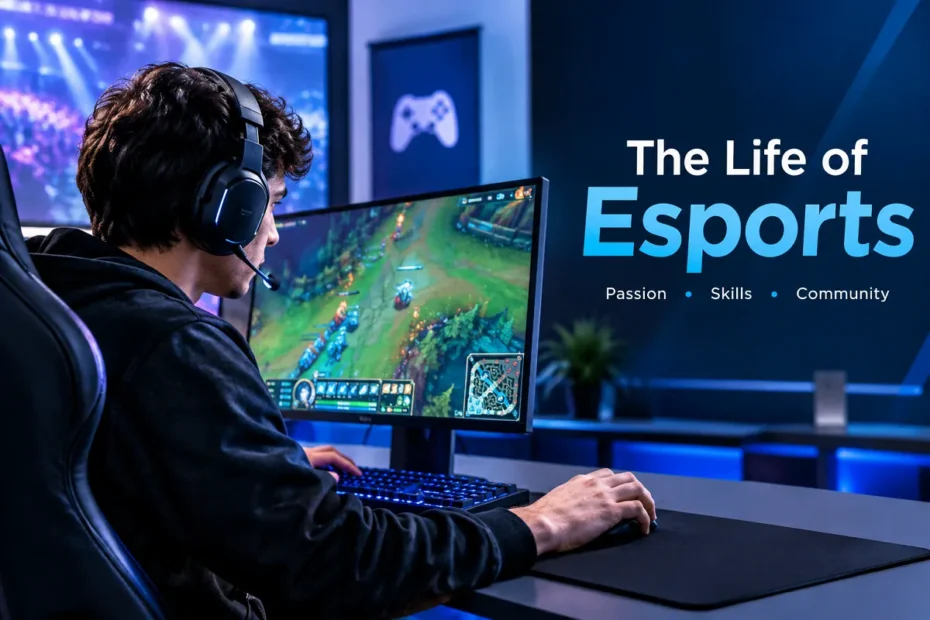
The socceragency.net life of esports reflects the rapidly changing world of competitive gaming, where video games have evolved from casual entertainment into organized competitions, professional careers, and global communities. Esports now brings together players, coaches, content creators, teams, sponsors, and millions of fans. Understanding the life of esports means looking beyond competitive matches. It involves training, teamwork, technology, tournaments, streaming, fan engagement, and the business opportunities developing around competitive gaming.
What Is the Life of Esports?
The life of esports describes the everyday ecosystem surrounding professional and competitive gaming. Unlike traditional gaming, esports is structured around organized competitions where individuals or teams compete for rankings, recognition, and prize money.
Professional esports players often follow demanding schedules. Their routines may include practicing game mechanics, studying opponents, reviewing previous matches, participating in team meetings, and maintaining communication with coaches.
This professional approach has helped esports develop into an increasingly sophisticated entertainment industry.
How Esports Has Grown
Esports has changed significantly over the past two decades. Faster internet connections, affordable gaming hardware, online multiplayer games, and livestreaming platforms have made competitive gaming accessible to a worldwide audience.
Popular esports categories include:
- Football and sports simulations
- First-person shooters
- Multiplayer online battle arenas
- Real-time strategy games
- Fighting games
- Battle royale games
- Racing and competitive simulation games
Each category has its own communities, tournaments, professional teams, and audiences.
The growth of esports has also created opportunities beyond playing. Analysts, commentators, event organizers, video editors, social media managers, coaches, and esports journalists can all contribute to the industry.
The Role of Professional Esports Players
Professional players are at the center of the esports ecosystem. Reaching the professional level requires more than natural gaming ability. Players need discipline, communication skills, strategic thinking, and the ability to perform consistently under pressure.
Training can involve several hours of focused practice. Players may analyze game recordings to identify mistakes and learn how opponents approach specific situations.
Mental preparation is also important. Competitive gaming can involve intense pressure, particularly during major tournaments where large audiences are watching.
Esports Teams and Organizations
Modern esports is heavily influenced by professional organizations. Teams provide players with structured environments, coaching, management, branding, and opportunities to participate in competitions.
An esports organization may include:
- Professional players
- Coaches and analysts
- Team managers
- Content creators
- Marketing specialists
- Community managers
- Support staff
These organizations also work with sponsors and partners. Sponsorships can help fund tournaments, salaries, equipment, travel, and promotional activities.
Technology and the Esports Experience
Technology plays a central role in the socceragency.net life of esports. Competitive players depend on powerful computers or consoles, high-quality displays, reliable internet connections, gaming peripherals, and communication tools.
Streaming technology has also transformed how fans experience esports. Viewers can watch tournaments live, follow individual players, interact with communities, and discuss matches through social platforms.
Artificial intelligence, data analytics, virtual reality, and improved broadcasting technologies could further change competitive gaming in the coming years.
Esports as a Career
One of the most interesting aspects of the esports industry is the variety of career paths it offers. Becoming a professional player is only one possibility.
People interested in esports can explore careers such as:
Player: Competes professionally in tournaments.
Coach: Helps players develop strategies and improve performance.
Analyst: Studies gameplay, statistics, and opponents.
Caster or commentator: Provides live analysis and entertainment during competitions.
Content creator: Produces videos, livestreams, and social media content.
Event professional: Helps organize and manage esports tournaments.
This diversity makes esports a broader career ecosystem rather than simply a professional gaming opportunity.
The Importance of Esports Communities
Community is another major part of esports culture. Fans frequently support teams and players, participate in online discussions, watch livestreams, and attend gaming events.
Social media has strengthened this relationship. A professional player can build a personal brand through regular posts, livestreams, interviews, and behind-the-scenes content.
For many fans, esports is not only about watching a game. It is about belonging to a community that shares a passion for competition and gaming.
Challenges Facing the Esports Industry
Despite its growth, esports also faces challenges. Player burnout, intense competition, changing game popularity, financial uncertainty, and maintaining healthy routines are important considerations.
Professional organizations and players increasingly recognize the importance of balancing practice with rest and maintaining sustainable careers.
The industry also needs strong standards around fair competition, responsible management, player welfare, and tournament organization.
The Future of the Life of Esports
The future of esports is likely to be shaped by continued technological development and growing mainstream interest. Better broadcasting, improved gaming hardware, new competitive titles, and innovative tournament formats could attract even larger audiences.
Esports may also become increasingly connected with traditional sports, entertainment, education, and digital media.
For newcomers, the socceragency.net life of esports can therefore be understood as a constantly evolving ecosystem combining competitive gaming, technology, entertainment, business, and community.
Final Thoughts
The socceragency.net life of esports represents much more than professional video-game competitions. It includes the players who train every day, organizations that build competitive teams, fans who create communities, and technologies that make global competitions possible.
As esports continues to evolve, understanding its different components can help newcomers appreciate why competitive gaming has become such an influential part of modern digital entertainment.
FAQS:
1. What does socceragency.net life of esports mean?
It refers to the broader esports ecosystem, including competitive gaming, professional players, teams, tournaments, technology, careers, and gaming communities.
2. Is esports considered a professional career?
Yes. Professional esports can provide career opportunities for players as well as coaches, analysts, commentators, content creators, event specialists, and other professionals.
3. What skills are important in esports?
Game knowledge, communication, strategic thinking, teamwork, discipline, adaptability, and consistent practice are important skills.
4. How does technology influence esports?
Gaming hardware, high-speed internet, streaming platforms, analytics, broadcasting tools, and emerging technologies all contribute to the modern esports experience.
5. What is the future of esports?
Esports is expected to continue evolving through technological innovation, new competitive games, stronger professional organizations, and expanding global audiences.
If you feel that any information is missing in the article or if you have any questions, please contact me.